Client Overview
NZ Safety Blackwoods is one of New Zealand’s leading suppliers of workplace safety equipment, engineering supplies, workwear, uniforms, packaging, hygiene products, and industrial solutions. The company serves a wide range of industries, including construction, manufacturing, logistics, infrastructure, healthcare, and public services.
The NZSB Customer Mobile Application was developed to provide customers with a mobile first purchasing experience, extending the existing eCommerce ecosystem to smartphones and enterprise handheld devices. The application enables customers to complete end to end purchasing journeys entirely from their mobile devices.
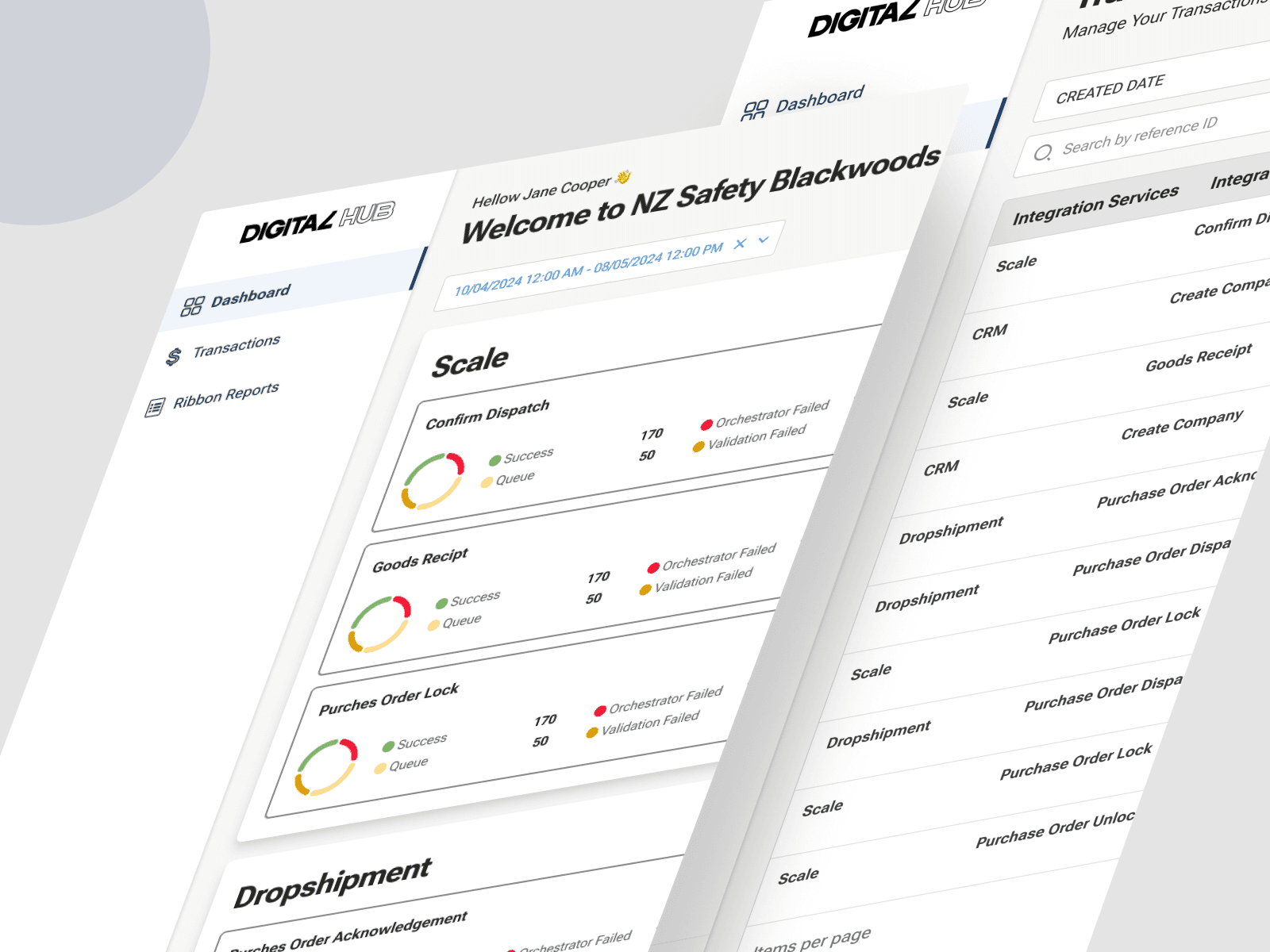
The main goal behind the Digital Hub project was to streamline and automate communication between key enterprise systems such as Scale, Kardex, HubSpot, and System21. The objective was to improve operational efficiency, enable real-time synchronization, reduce manual work, and support faster, more accurate warehouse and distribution workflows.
How They Operated Before
Before the updated Digital Hub solution, the client already had an existing Digital Hub system built in .NET with Hangfire running in the background. However, the older setup had limitations in visibility and operational control.
Teams were able to process integrations, but tracking transactions was difficult. There was no clear frontend visibility into what had happened during integration runs, and retry actions was not possible. Some integrations also relied on direct REST API calls and stored procedures between System21 and other systems, which made the overall workflow less transparent and harder to manage.
Challenges Faced
The main challenge was the lack of visibility into failed or completed workflows. When an integration failed, it was not easy to quickly identify the issue, trace the transaction, or retry it through a controlled process.
There was also no proper retry mechanism in the old setup, which meant manual intervention was often required. This created delays, increased operational effort, and made it harder for teams to monitor integration health across systems.
These issues made it clear that a more modern, observable, and manageable integration platform was needed.
Collaboration Approach
The project was delivered through a collaborative process based on client-provided requirements, online meetings, regular demos, and feedback sessions. After the MVP was delivered, the team continued showing progress through demo reviews and iterative improvements.
The delivery approach followed Kanban, which allowed the team to manage work continuously and respond quickly to changing priorities, new requirements, and integration requests. This made it possible to move steadily from MVP delivery into ongoing enhancement and expansion.
Technical Expertise & Solutions
Digital Hub was designed as an integration middleware platform that connects multiple business systems and manages workflow communication in a controlled and observable way.
The solution includes several core components:
Component
Internal payload receiver
External payload receiver
Frontend dashboard
Resource API
Database
Scheduler service
Service Bus
Orchestrator
Input validator
It also introduced role-based access for different users, including admin users who can retry failed transactions and standard users who can only view transaction details.
The system supports multiple integration groups and transaction flows, few including:
Integration Flow
Scale to Kardex
Kardex to Scale
Scale to System21
System21 to Scale
System21 to HubSpot
HubSpot to System21
Features
Ribbon reports
Transaction management
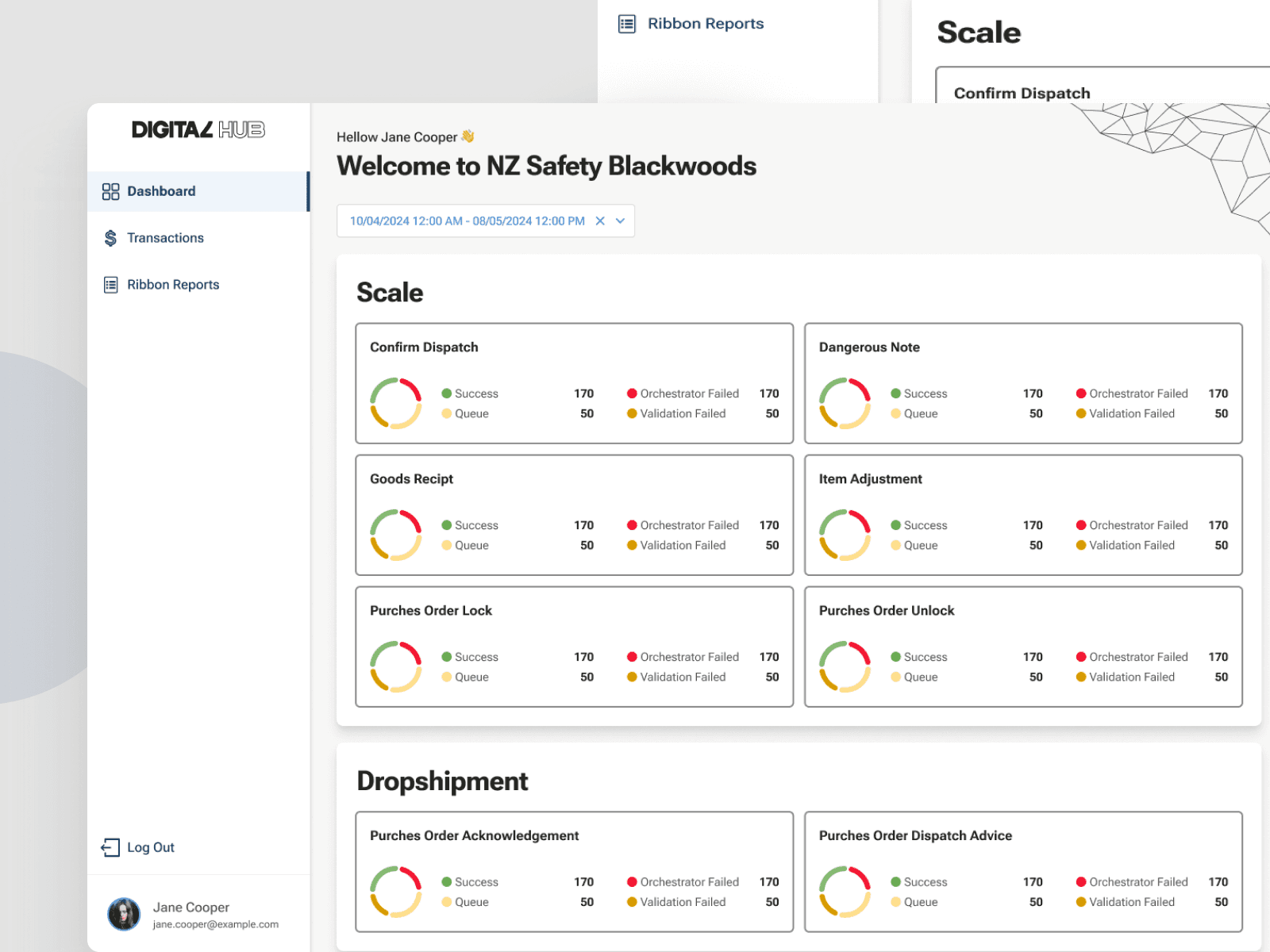
Dashboard monitoring - Admin Dashboard and View Dashboard
These solutions directly addressed the client’s key challenges by improving visibility, enabling controlled retries, and making integration transactions easier to trace and manage.

Tools & Tech Stack
The frontend was built using Next.js, providing a modern and responsive web portal for monitoring and managing integrations. The backend was developed using .NET/.NET Core with clean architecture, deployed as scalable services on Azure Container Apps.
The data layer used MS SQL Server with SQL Server private endpoints for secure access. Other Azure services included:
Azure Service
Azure Service Bus Queues
Azure Blob Storage
Azure Container Jobs
Azure Container App
The project also used:
Tool/Platform
Purpose
Datadog
for monitoring and alerting
SonarQube
for code quality checks
GitHub
for source control and CI/CD
Jira
for project tracking
Cloudflare
for blocking and request protection
Mandrill
for email integration
Webhook-based public payload receiver configuration
for external system communication
Third-party systems and platforms integrated into Digital Hub included:
Integrated System
Scale
Kardex
System21
HubSpot
Dropshipment
Mandrill
The technology stack was chosen for security, familiarity, and Microsoft-native support.
Current Status
The Digital Hub project was first deployed as an MVP in October in 2024. Since then, it has grown significantly, starting with just 2 integrations and expanding to around 45 integrations today.
The platform is live and actively evolving. Ongoing work includes change requests, new features, and additional integrations. The system continues to grow as the client’s operational needs expand.
Impact & Benefits
Digital Hub has delivered clear operational value to NZ Safety Blackwoods. The platform improved integration visibility, added retry support, and introduced stronger monitoring through tools like Datadog. It also reduced manual intervention and improved collaboration across teams managing different business systems.
With centralized transaction monitoring and better error handling, the client now has more control over workflow execution. Automated integrations have reduced the need for human intervention except in retry scenarios, making operations more efficient and reliable.
The platform has already supported around 10,000 workflow executions daily, showing that it is handling business-critical operations at scale.
Overall, Digital Hub transformed fragmented system communication into a more visible, manageable, and scalable integration layer for NZ Safety Blackwoods.